
About Course
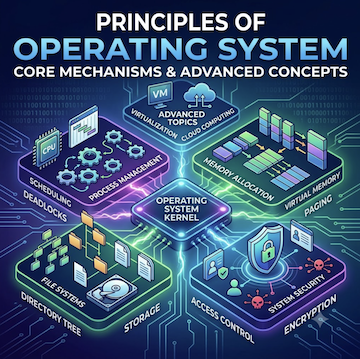
The “Principles of Operating System” course is designed to teach you the fundamental concepts, structures, and internal mechanisms that power modern computing devices. You will explore critical functions such as process management, CPU scheduling, memory allocation, input/output systems, and file management. Beyond the basics, this course introduces various environments—including UNIX/Linux, Windows, macOS, and embedded operating systems—and tackles contemporary IT challenges like system security, distributed systems, virtualization, and cloud computing models (IaaS, PaaS, SaaS).
Course Content
Foundations of Operating Systems and Process Management
-
Introduction to Operating Systems (Types, Services, and System Calls)
13:36 -
Quiz: Introduction to Operating Systems
-
Process Management (Processes vs. Threads, States, and PCBs)
08:53 -
Quiz: Process Management
-
CPU Scheduling (Algorithms, Criteria, and Context Switching)
10:14 -
Quiz: CPU Scheduling
Concurrency and Memory Management
Storage and Input/Output Systems
System Security and Advanced Operating System Concepts
Earn a certificate
Add this certificate to your resume to demonstrate your skills & increase your chances of getting noticed.
Student Ratings & Reviews


Clear, engaging, and very informative. A great match for building a solid foundation in cybersecurity and cloud concepts.
:)
All goods
good
It provided me alot of resources to study with
goodsss
I'm gonna rate this site to Amazing cause as IT student so hard to make this site like this and for my experience to this subject is so hard but fight for the futere.

Good

The lesson was informative and easy to understand. It helped me learn more about memory management and page replacement algorithms in operating systems.

easy test :P

Good Experience
The most valuable part is how it links theory to real systems. Concepts like consensus in distributed systems, hypervisors that run multiple isolated virtual machines, and the differences between IaaS, PaaS, and SaaS or between public, private, and hybrid clouds all build on the same fundamentals of resource sharing, isolation, and coordination.
The course can be challenging. Topics like synchronization, deadlocks, and memory management are abstract and take practice to grasp, so hands-on labs and example problems help a lot. Even so, it pays off for anyone interested in software development, cloud engineering, cybersecurity, or system administration, because it explains why systems behave the way they do, not just how to use them.