5.00
(1 Rating)

Application Lifecycle Management (ALM)
Categories: IT
Wishlist Share
Share Course
Page Link
Share On Social Media

About Course

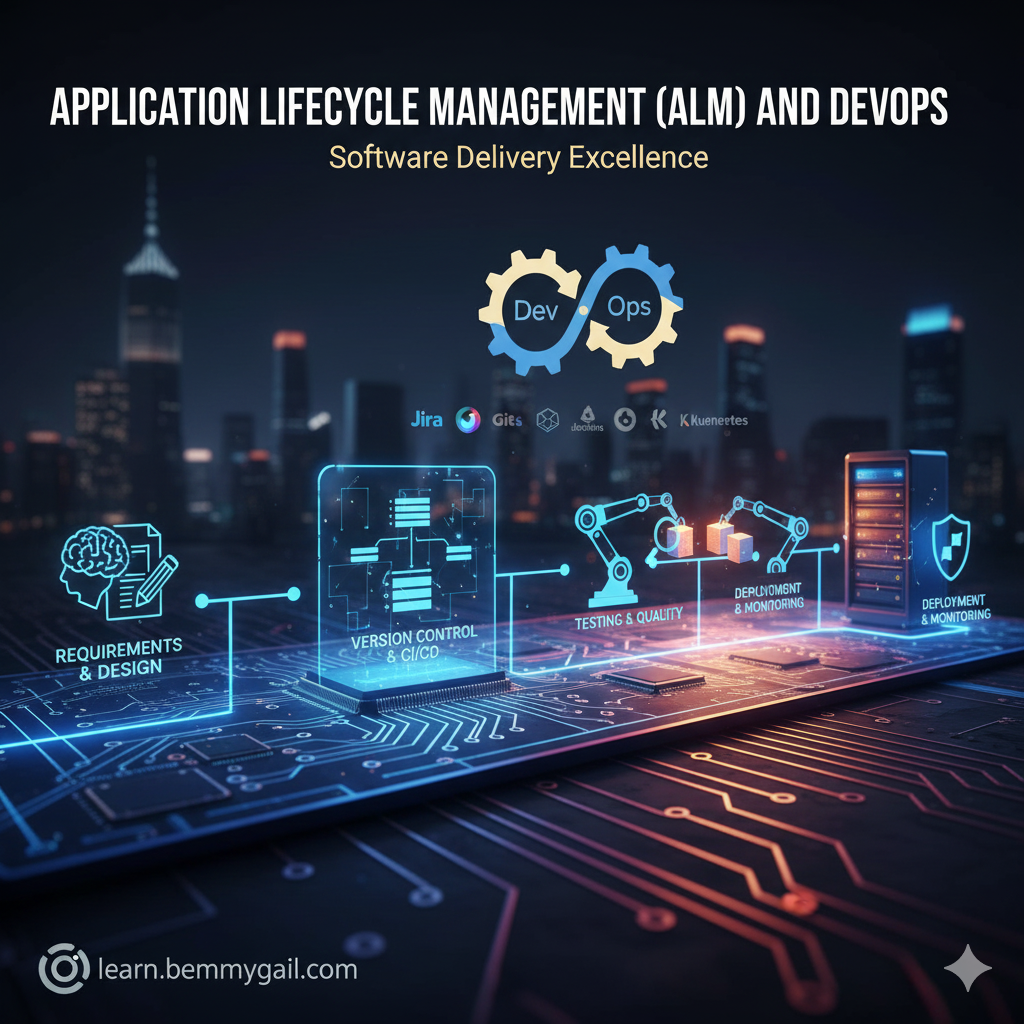
Application Lifecycle Management (ALM) and DevOps: Software Delivery Excellence

This course provides a comprehensive, process-oriented overview of managing software applications from initial product conception through retirement. It defines the Application Lifecycle Management (ALM) framework, differentiating it from the SDLC. Students will gain practical skills in key phases, including Requirements Management, Version Control (Git), Continuous Integration/Continuous Deployment (CI/CD), Testing, and DevOps methodologies, ensuring high-quality, efficient software delivery.

What Will You Learn?

  • Differentiate Application Lifecycle Management (ALM) from the traditional SDLC and understand its three pillars.
  • Master Agile methodologies (Scrum, Kanban) and their practical application.
  • Write effective User Stories and Acceptance Criteria and manage a product backlog in a real-world tool.
  • Implement robust Version Control using Git, including branching strategies (GitFlow) and conflict resolution.
  • Design and explain a basic Continuous Integration/Continuous Deployment (CI/CD) pipeline.
  • Differentiate testing types (Unit, Integration, UAT) and manage the Defect Tracking Lifecycle.
  • Apply the DevOps CALMS framework and plan strategies for application Maintenance and Retirement.

Course Content

Module 1: Foundations and Governance
This module establishes the overall governance framework for software, defining ALM and setting the stage with critical upfront processes: selecting a methodology and managing all requirements.

  • Introduction to ALM: Pillars and Methodologies
    09:27
  • ALM: Pillars and Methodologies Quiz
  • Requirements Management and User Stories
    03:47
  • Quiz: Requirements Management and User Stories
  • Preliminary Examination

Module 2: Development and Quality Control
This module dives into the technical core of ALM: managing code changes efficiently, automating the build process, and implementing rigorous quality assurance practices to minimize defects.

Module 3: Release and Operations
This module focuses on the transition from development to production, examining strategies for safe and fast deployment, and the cultural shift necessary to monitor and maintain applications in a live environment.

Module 4: Maintenance and ALM Strategy
The final module covers the long-term lifecycle of software, addressing maintenance strategies, legacy systems, and the final retirement of an application, culminating in the complete ALM project plan.

Earn a certificate

Add this certificate to your resume to demonstrate your skills & increase your chances of getting noticed.

selected template

Student Ratings & Reviews

5.0
Total 1 Rating
5
1 Rating
4
0 Rating
3
0 Rating
2
0 Rating
1
0 Rating
yang
2 months ago
Nice and easy to learn.

Want to receive push notifications for all major on-site activities?