
Principles of Operating Systems: Core Mechanisms to Advanced Concepts
Categories: IT
Wishlist Share

About Course

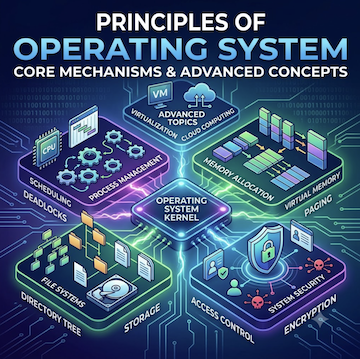
The “Principles of Operating System” course is designed to teach you the fundamental concepts, structures, and internal mechanisms that power modern computing devices. You will explore critical functions such as process management, CPU scheduling, memory allocation, input/output systems, and file management. Beyond the basics, this course introduces various environments—including UNIX/Linux, Windows, macOS, and embedded operating systems—and tackles contemporary IT challenges like system security, distributed systems, virtualization, and cloud computing models (IaaS, PaaS, SaaS).

What Will You Learn?

  • OS Fundamentals: Understand the role, functions, and components of various operating systems (batch, time-sharing, real-time, embedded).
  • Process Management: Differentiate between processes and threads, understand process states, and evaluate different CPU scheduling algorithms (FCFS, SJF, Round Robin).
  • Concurrency Control: Analyze synchronization mechanisms and evaluate deadlock prevention and avoidance strategies.
  • Memory Management: Explore logical vs. physical addresses, memory allocation schemes, and virtual memory (paging and segmentation).
  • Storage & I/O: Design simple file systems, compare file organization types, and understand I/O techniques (DMA, interrupt-driven I/O).
  • System Security: Identify common security threats, configure basic security settings, and utilize protection mechanisms (ACLs, memory protection).
  • Advanced Topics: Explore contemporary trends like distributed systems, virtualization (VMware, VirtualBox), and cloud computing platforms (AWS, Azure, Google Cloud).

Course Content

Foundations of Operating Systems and Process Management
This period covers the fundamental concepts, structures, and roles of operating systems, progressing into how the OS manages processes and schedules CPU time.

  • Introduction to Operating Systems (Types, Services, and System Calls)
  • Process Management (Processes vs. Threads, States, and PCBs)
  • CPU Scheduling (Algorithms, Criteria, and Context Switching)

Concurrency and Memory Management
This period dives into the challenges of concurrent processing, resource sharing, and the strategies used by the OS to efficiently allocate and manage system memory.

Storage and Input/Output Systems
Students will examine how the operating system organizes data on storage devices and interacts with various peripheral hardware components.

System Security and Advanced Operating System Concepts
The final phase focuses on protecting the operating system environment from threats and introduces modern, advanced computing trends.

Earn a certificate

Add this certificate to your resume to demonstrate your skills & increase your chances of getting noticed.
selected template

Student Ratings & Reviews

No Review Yet
No Review Yet

Want to receive push notifications for all major on-site activities?